

Honoring Legacy, Inspiring Future
The Calvert Vaux Preservation Alliance is dedicated to preserving and celebrating the architectural and landscape designs of Calvert Vaux. Through restoration, education, and advocacy, we ensure his visionary contributions continue to enrich communities for generations to come. Our current focus is developing a restoration and re-use plan for The Point in Staatsburg, N.Y., the country seat Vaux designed for the Lydig Hoyt family in 1855. The family occupied the site for 108 years. Although overgrown and in need of substantial repair, the 91-acre estate remains largely unaltered from Vaux’s designs.

LATEST NEWS
-
![]()
Kyle Toth of PS&S LLC has written a narrative for an “official” walking tour of The Point
-
![]()
An Update on the Hoyt Carriageway Bridge
-
![]()
Meet the Team: David Ashen


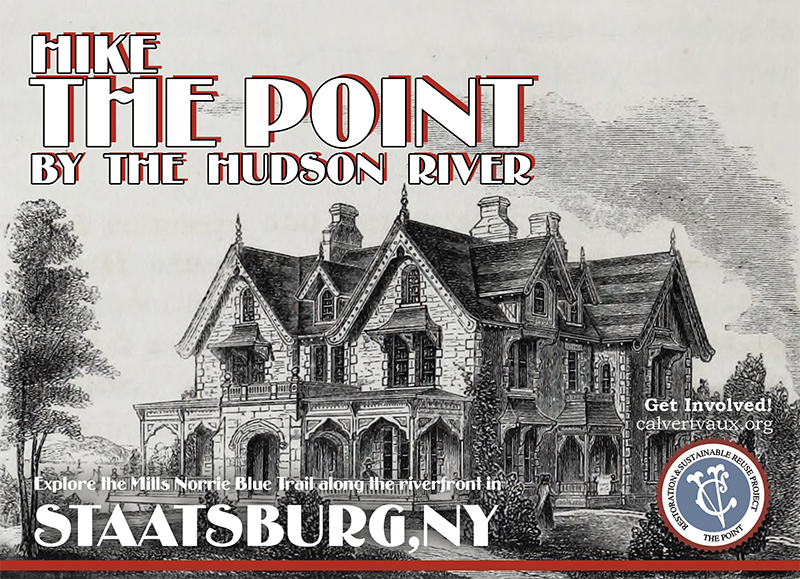

Hike The Point!
Experience the iconic views of the Hudson River and Catskill Mountains that inspired Calvert Vaux in the picturesque siting and design of The Point.
Discover The Point's historic Hoyt Carriageway and Bridge, charming early 20th-century barn complex and the remnants of lost outbuildings, gardens and farmland.
Learn about the pivotal role played by both Calvert Vaux and his work at The Point in the evolution of American Picturesque architecture and landscape design.


